


Apple Vision Pro, released in February, presents a bold vision for augmented and virtual reality (AR/VR). Yet the Vision Pro has been received with a whimper of joining disappointments from Google Glasses, Microsoft HoloLens, Meta Quest, and Magic Leap.
Augmented and virtual reality highlight the challenge of forecasting the adoption of paradigm-shifting technologies. When the Gartner Hype Cycle first appeared in 1995, virtual reality was one of ten technologies highlighted. Augmented and virtual reality appeared on the Gartner Hype Cycle 15 times in the next 25 years, more than any other technology.
Gartner Hype Cycle Success Rate
Since 1995, Gartner annually highlights a shortlist of promising new technologies that anticipated the Internet, smartphones, cloud computing, big data, and artificial intelligence. Gartner has a two-thirds success rate and 40% of the technologies identified spawned significant new businesses, though most take longer to develop than anticipated and 70% fall into the Trough of Disillusionment after climbing to the Peak of Inflated Expectations before reaching the Slope of Enlightenment.
Three Startup Strategies to Survive and Thrive
The Gartner Hype Cycle offers a market perspective that informs strategy for entrepreneurs and investors. Figure 2 shows three broad startup strategies that apply as technologies and markets mature.
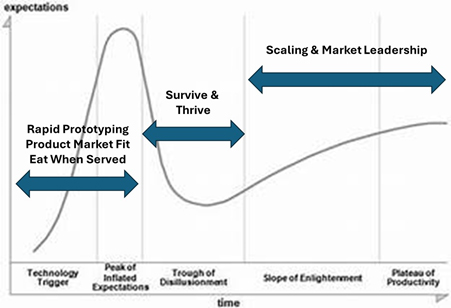 Figure 1: Three Entrepreneurial Approaches across the Gartner Hype Lifecycle
Rapid Prototyping to Achieve Product Market Fit
The Gartner Hype Cycle is a double-edged sword. Recognition brings legitimacy and possibly funding but also heightens expectations and attracts competition. Competition and funding accelerate development, yet expectations often outrun reality.
Yet descending into the Trough of Disillusionment is not inevitable. About 30% of Gartner Hype Cycle technologies avoid the Slope of Enlightenment by finding Product Market Fit before reaching the Peak of Inflated Expectations. Startups should stay lean and nimble before Product Market Fit so they can experiment and pivot quickly as needed.
First-mover advantage is useful only when the technology is proven and customers are ready to adopt it. The balancing act is to raise funding when it is readily available yet preserve cash and stay lean during the search for Product Market Fit. Lean, well-funded startups are best positioned to capitalize on opportunities and survive the Trough of Disillusionment.
Survive and Thrive the Trough of Disillusionment
Most startups experience disappointment before achieving ultimate success. Steve Jobs, Jeff Bezos, Elon Musk, and Larry Ellison succeeded due to their persistence and ability to scale when market conditions permit.
“Survive and Thrive” is the resonant theme when playing through a market downturn. Market downturns are an opportunity to cut costs, refocus on the core value proposition, pivot to find Product-Market fit, and improve the unit economics of the business. Market downturns are also good times to start companies as they have more access to experienced talent and more time to refine products with less competitive noise.
Troughs of Disillusionment delay but do not diminish prospects for the technology sector. They are periods of market consolidation, but the startups that survive face fewer competitors and have a higher likelihood of success. Though obscured, there is light at the end of the tunnel and, for those that survive, the light shines brightly indeed.
3. Scaling and Winning Market Leadership
Competitive dynamics shift on the Slope of Enlightenment and Plateau of Productivity. A new generation of startups arrives unencumbered by technical debt but unseasoned by the wisdom gained during more challenging times. Incumbents arrive once market uncertainty diminishes and bring scaling advantages and established customer relationships.
The skills that got a startup here won’t win success there. Competitive dynamics shift from agility to operational scalability and winning market share. Scaling a business requires different skill sets. Sales and marketing, financial management, and operations assume greater importance at this stage, and CEOs often recruit leaders with the proven ability to scale businesses at this stage.
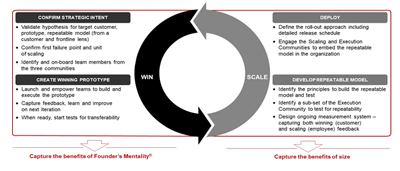 Figure 2: Winning Product Market Fit then Scaling the Business
Gartner Hype Cycle: Is the Hype Desirable?
Operating below the radar attracts less competition, allows more time for startups to hone their technology and business model, and lowers capital requirements. As David Packard observed, more companies die of indigestion than starvation.
The best opportunities are often those that others overlook. Over one-third of public unicorn IPOs had difficulty raising initial funding. Persistence is a key attribute of founder success regardless of whether startups operate under the radar or in the spotlight.
Entrepreneurs should neither seek nor avoid reference to the Gartner Hype Cycle. Operating under the radar has advantages and recognition brings challenges. The Gartner Hype Cycle reminds us that markets ebb and flow. Entrepreneurs must stay balanced even when markets are not.
